

Socialism With A Human Face
| Alexander Dubček | |
|---|---|
 Alexander Dubček | |
| Offset Secretarial assistant of the Communist Political party of Czechoslovakia | |
| In office v Jan 1968 – 17 April 1969 | |
| Preceded by | Antonín Novotný |
| Succeeded by | Gustáv Husák |
| Chairman of the Federal Assembly of Czechoslovakia | |
| In office 28 Dec 1989 – 25 June 1992 | |
| Preceded past | Alois Indra |
| Succeeded by | Michal Kováč |
| In office 28 April 1969 – xv October 1969 | |
| Preceded by | Peter Colotka |
| Succeeded by | Dalibor Hanes |
| Personal details | |
| Born | (1921-11-27)27 November 1921 Uhrovec, Czechoslovakia (now Slovakia) |
| Died | 7 Nov 1992(1992-11-07) (aged 70) Prague, Czechoslovakia (now Czechia) [1] |
| Political political party | Communist Party of Slovakia (1939–1948) Communist Party of Czechoslovakia (1948–1970) |
| Signature | 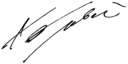 |
Alexander Dubček (Slovak pronunciation: [ˈaleksander ˈduptʂek]; 27 November 1921 – vii November 1992) was a Slovak politician who served as the First Secretarial assistant of the Presidium of the Central Committee of the Communist Political party of Czechoslovakia (KSČ) (de facto leader of Czechoslovakia) from January 1968 to April 1969. He attempted to reform the communist government during the Prague Spring but was forced to resign following the Warsaw Pact invasion in August 1968.
During his leadership nether the slogan "Socialism with a human face up", Czechoslovakia lifted censorship on the media and liberalized society, fueling the and so-chosen New Wave in filmography and paving the way for a period that became known as the Prague Spring. Still, Dubček was put under pressure past Stalinist voices inside the political party, likewise as the Soviet leadership, who opposed the direction the country was taking and feared that Czechoslovakia could loosen ties with the Soviet Spousal relationship and become more westernized. As a result, the land was invaded by Soviet-led Warsaw Pact countries on xx–21 Baronial 1968, effectively ending the Prague Bound. Dubček was forced to resign in April 1969 and succeeded by Gustáv Husák, who initiated normalization past clamping down on the liberalizing and pro-democracy motility. Dubček was expelled from the Communist Party in 1970.
During the Velvet Revolution in 1989, Dubček served as the Chairman of the federal Czechoslovak parliament and contended for the presidency with Václav Havel. The European Parliament awarded Dubček the Sakharov Prize the aforementioned year.[two]
Early on life [edit]
Alexander Dubček was born in Uhrovec, Czechoslovakia (now in Slovakia), on 27 November 1921.[three] [4] When he was 3 years quondam, the family unit moved to the Soviet Spousal relationship, in role to aid build socialism and in part because jobs were scarce in Czechoslovakia; then that he was raised until 12 on a district in Pishpek (at present Bishkek), in the Kirghiz SSR of the Soviet Spousal relationship (now Kyrgyzstan), as a member of the Esperantist and Idist industrial cooperative Interhelpo.[5] [vi] In 1933, the family moved to Gorky, now Nizhny Novgorod, and in 1938 returned to Czechoslovakia.
During the 2nd Earth State of war, Dubček joined the underground resistance against the wartime pro-German Slovak state headed by Jozef Tiso. In August 1944, Dubček fought in the January Žižka partisan brigade[7] during the Slovak National Uprising and was wounded twice, while his blood brother, Július, was killed.[viii]
Political career [edit]
During the war, Dubček joined the Communist Party of Slovakia (KSS),[ix] which had been created after the formation of the Slovak state and in 1948 was transformed into the Slovak co-operative of the Communist Party of Czechoslovakia (KSČ).
Later on the war, he steadily rose through the ranks in Communist Czechoslovakia. From 1951 to 1955 he was a fellow member of the National Assembly, the parliament of Czechoslovakia. In 1953, he was sent to the Moscow Political College, where he graduated in 1958.[10] In 1955, he joined the Central Committee of the Slovak branch and in 1962 became a fellow member of the presidium. In 1958 he besides joined the Primal Commission of the Communist Party of Czechoslovakia, which he served every bit a secretary from 1960 to 1962 and as a fellow member of the presidium later on 1962. From 1960 to 1968 he once more than was a fellow member of the federal parliament.
In 1963, a power struggle in the leadership of the Slovak co-operative unseated Karol Bacílek and Pavol David, hard-line allies of Antonín Novotný, First Secretary of the KSČ and President of Czechoslovakia. In their place, a new generation of Slovak Communists took control of political party and state organs in Slovakia, led by Dubček, who became First Secretary of the Slovak branch of the party.[nine]
Under Dubček's leadership, Slovakia began to evolve toward political liberalization. Considering Novotný and his Stalinist predecessors had denigrated Slovak "bourgeois nationalists", most notably Gustáv Husák and Vladimír Clementis, in the 1950s, the Slovak branch worked to promote Slovak identity. This mainly took the form of celebrations and commemorations, such as the 150th birthdays of 19th century leaders of the Slovak National Revival Ľudovít Štúr and Jozef Miloslav Hurban, the centenary of the Matica slovenská in 1963, and the twentieth anniversary of the Slovak National Uprising. At the aforementioned fourth dimension, the political and intellectual climate in Slovakia became freer than that in the Czech lands.[11] This was exemplified past the ascension readership of Kultúrny život, the weekly newspaper of the Union of Slovak Writers, which published frank discussions of liberalization, federalization and democratization, written past the most progressive or controversial writers – both Slovak and Czech. Kultúrny život consequently became the first Slovak publication to gain a wide following amongst Czechs.
Prague Spring [edit]
The Czechoslovak planned economy in the 1960s was in serious decline and the imposition of cardinal control from Prague disappointed local Communists, while the de-Stalinization program caused further disquiet. In October 1967, a number of reformers, nearly notably Ota Šik and Alexander Dubček, took action: they challenged First Secretary Antonín Novotný at a Central Committee coming together.[12] Novotný faced a mutiny in the Central Committee, so he secretly invited Leonid Brezhnev, the Soviet leader, to make a whirlwind visit to Prague in December 1967 in order to shore up his own position. When Brezhnev arrived in Prague and met with the Central Commission members, he was stunned to learn of the extent of the opposition to Novotný, leading Brezhnev to opt for non-interference,[13] and paving the way for the Primal Committee to force Novotný's resignation. Dubček, with his background and training in Russian federation, was seen by the USSR equally a rubber pair of easily. "Our Sasha", as Brezhnev called him,[14] became the new First Secretary of the Communist Party of Czechoslovakia on 5 January 1968.
The period post-obit Novotný'due south downfall became known every bit the Prague Spring. During this fourth dimension, Dubček and other reformers sought to liberalize the Communist government—creating "socialism with a homo face".[15] Though this loosened the party's influence on the land, Dubček remained a devoted Communist and intended to preserve the political party's rule. However, during the Prague Bound, he and other reform-minded Communists sought to win popular support for the Communist regime by eliminating its most repressive features, allowing greater freedom of expression and tolerating political and social organizations not under Communist control.[xvi] "Dubček! Svoboda!"[17] became the popular refrain of student demonstrations during this period, while a poll gave him 78-percent public support.[18] However Dubček found himself in an increasingly untenable position. The program of reform gained momentum, leading to pressures for further liberalization and democratization. At the same fourth dimension, hard-line Communists in Czechoslovakia and the leaders of other Warsaw Pact countries pressured Dubček to rein in the Prague Leap. Though Dubček wanted to rein in the reform motion, he refused to resort to any draconian measures to do then, while notwithstanding stressing the leading part of the Party and the centrality of the Warsaw Pact.[19]
The Soviet leadership tried to slow downwardly or stop the changes in Czechoslovakia through a series of negotiations. The Soviet Union agreed to bilateral talks with Czechoslovakia in July at Čierna nad Tisou, near the Slovak-Soviet border.[eighteen] At the meeting, Dubček tried to reassure the Soviets and the Warsaw Pact leaders that he was yet friendly to Moscow, arguing that the reforms were an internal matter. He idea he had learned an of import lesson from the failing of the Hungarian Revolution of 1956, in which the leaders had gone every bit far as withdrawing from the Warsaw Pact. Dubček believed that the Kremlin would allow him a free paw in pursuing domestic reform as long every bit Czechoslovakia remained a faithful member of the Soviet bloc. Despite Dubček'southward continuing efforts to stress these commitments, Brezhnev and other Warsaw Pact leaders remained frightened, seeing even a partly free press as threatening an end to ane-party rule in Czechoslovakia, and (by extension) elsewhere in Eastern Europe.[20]
Downfall [edit]
On the dark of twenty–21 August 1968, military forces from every Warsaw Pact member land (except for Albania, Romania and Due east Deutschland[21]) invaded Czechoslovakia. The occupying armies speedily seized control of Prague and the Central Committee's building, taking Dubček and other reformers into Soviet custody. Only, before they were arrested, Dubček urged the people non to resist militarily, on the grounds that "presenting a war machine defence would take meant exposing the Czech and Slovak peoples to a senseless bloodbath".[22] Afterwards in the 24-hour interval, Dubček and the others were taken to Moscow on a Soviet military transport aircraft.
The non-violent resistance of the Czech and Slovak population, which delayed total loss of control to the Warsaw Pact forces for a full eight months (in contrast to the Soviet armed forces's guess of iv days), became a prime number example of civilian-based defense. A latter-day The Good Soldier Švejk (referring to an early on-20th-century Czech satirical novel) wrote of "the comradely pranks of changing street names and road signs, of pretending not to understand Russian, and of putting out a swell multifariousness of humorous welcoming posters".[23] Meanwhile, radio stations called for the invaders to return domicile: "Long live liberty, Svoboda, Dubček".[24] Nevertheless, the reformers were forced to accede to Soviet demands, signing the Moscow Protocol (which only František Kriegel refused to sign) and ending Dubček's Prague Spring.[25]
Dubček and most of the reformers were returned to Prague on 27 Baronial, and Dubček retained his mail as the political party's first secretary until April 1969.[26] The achievements of the Prague Bound were not reversed immediately, only over a period of several months.
In Jan 1969, Dubček was hospitalized in Bratislava complaining of a common cold and had to abolish a oral communication. Rumors sprang upward that his disease was radiation sickness and that information technology was acquired by radioactive strontium being placed in his soup during his stay in Moscow in an endeavour to kill him. However, a U.Southward. intelligence report discounted this for lack of testify.[27]
Dubček was forced to resign as Outset Secretary in Apr 1969, following the Czechoslovak Hockey Riots. He was re-elected to the Federal Associates (every bit the federal parliament was now called) and became its chairman. He was after sent as ambassador to Turkey (1969–70),[28] allegedly in the hope that he would defect to the W, which however did not occur. In 1970, he was expelled from the Communist party and lost his seat in the Slovak parliament (which he had held continuously since 1964) and the Federal Assembly.
Individual citizen [edit]
After his expulsion from the political party, Dubček worked in the Forestry Service in Slovakia. He remained a popular effigy among the Slovaks and Czechs he encountered on the job, using this reverence to procure scarce and hard-to-find materials for his workplace. Dubček and his wife, Anna, continued to alive in a comfy villa in a nice neighborhood in Bratislava. In 1988, Dubček was allowed to travel to Italy to accept an honorary doctorate from University of Bologna, and, while there, he gave an interview with Italian Communist Party daily newspaper Fifty'Unità, his outset public remarks to the printing since 1970. Dubček's appearance and interview helped to return him to international prominence.
In 1989, he was awarded the almanac Sakharov Prize in its second year of existence.[29]
Velvet Revolution [edit]

Plaque commemorating Dubček'due south service equally chairman of the Czechoslovak Parliament 1989–1992, on the wall of the National Museum in Prague
During the Velvet Revolution of 1989, he supported the Public Against Violence (VPN) and the Borough Forum. On the night of 24 November, Dubček appeared with Václav Havel on a balcony overlooking Wenceslas Foursquare, where he was greeted with tremendous applause from the throngs of protesters beneath and embraced every bit a symbol of democratic freedom. Several onlookers even chanted, "Dubček na hrad!" ("Dubček to the Castle"—i.e., Dubček for President). He disappointed the crowd somewhat by calling the revolution a chance to go along the work he had started 20 years earlier to prune out what was wrong with Communism. By that fourth dimension, the demonstrators in Prague wanted nix to practise with Communism of whatsoever sort, even Dubček'south humane version. Subsequently that night, Dubček was on phase with Havel at the Laterna Magika theatre, the headquarters of Civic Forum, when the unabridged leadership of the Communist Party resigned, in effect ending Communist rule in Czechoslovakia.[30]
Dubček was elected Chairman of the Federal Assembly (the Czechoslovak Parliament) on 28 December 1989, and re-elected in 1990 and 1992.
At the time of the dismantling of Communist political party rule, Dubček described the Velvet Revolution as a victory for his humanistic socialist outlook. In 1990, he received the International Humanist Honor from the International Humanist and Ethical Wedlock. He also gave the commencement address to the graduates of the Form of 1990 at The American University in Washington, D.C.; information technology was his first trip to the United States.[31]
In 1992, he became leader of the Social Autonomous Party of Slovakia and represented that political party in the Federal Assembly. At that time, Dubček passively supported the union between Czechs and Slovaks in a single Czecho-Slovak federation against the ultimately successful push towards an independent Slovak state.
Death [edit]


Monument to Dubček near the site of his fatal accident
Dubček died on 7 November 1992, as a upshot of injuries sustained in a automobile crash that took identify on i September on the Czech D1 highway, near Humpolec, 20 days brusk of his 71st birthday.[32] [33] He was buried in Slávičie údolie cemetery in Bratislava, Slovakia. His death remained a question of social and political theories alleging involvement by either then–Prime number Government minister of Slovakia Vladimír Mečiar or KGB. None of the theories were confirmed past subsequent investigation.[34] [35]
Legacy and Cultural Representations [edit]
In 1984, French singer and songwriter Alice Dona had released a song named Le Jardinier de Bratislava with the lyrics written by Claude Lemesle, as an apolitical song about love and longing for freedom. The vocal was inspired by a trip of a French television coiffure to visit Dubček in his villa near Slavín, Bratislava. They were denied the admission past the ŠtB secret police. The sole footage collected of Dubček was of him attending to his garden.[36]
References [edit]
- ^ Battiata, Mary (8 Nov 1992). "Czech Leader Alexander Dubcek Dies". The Washington Post . Retrieved 16 February 2022.
- ^ European Parliament, Sakharov Prize Network , retrieved x September 2013
- ^ "Alexander Dubček, Czechoslovak statesman". Encyclopedia Britannica . Retrieved 5 November 2019.
- ^ Dennis Kavanagh (1998). "Dubcek, Alexander". A Dictionary of Political Biography. Oxford: OUP. p. 152. Retrieved 1 September 2013.
- ^ D. Viney, 'Alexander Dubcek', Studies in Comparative Communism 1 (1968) pp. 17–19
- ^ William Shawcross, 'Dubcek', (rev'd ed. 1990) p. 17
- ^ Kirschbaum, Stanislav J. (2016). A History of Slovakia: The Struggle for Survival. St. Martin's Press. p. 239. ISBN9781250114754.
- ^ D. Viney, 'Alexander Dubcek', Studies in Comparative Communism 1 (1968) pp. 19–20
- ^ a b B. Wasserstein, Barbarism & Civilization (Oxford 2007) p. 598
- ^ D. Viney, 'Alexander Dubcek', Studies in Comparative Communism 1 (1968) p. 21
- ^ D. Viney, 'Alexander Dubcek', Studies in Comparative Communism one (1968) pp. 23–4
- ^ B. Wasserstein, Civilization and Barbarism (Oxford 2007) p. 598
- ^ D. Viney, "Alexander Dubcek", Studies in Comparative Communism 1 (1968) p. 26
- ^ Brezhnev, quoted in B. Wasserstein, Culture and Barbarism (Oxford 2007) pp. 598, 603
- ^ B. Wasserstein, Civilisation and Barbarism (Oxford 2007) p. 600
- ^ B. Wasserstein, Civilisation and Barbarism (Oxford 2007) p. 599
- ^ Lost World of Communism (Czechoslovakia), BBC (Documentary)
- ^ a b B. Wasserstein, Civilization and Atrocity (Oxford 2007) p. 601
- ^ D. Viney, 'Alexander Dubcek', Studies in Comparative Communism ane (1968) p. 31
- ^ B. Wasserstein, Civilisation and Atrocity (Oxford 2007) p. 605
- ^ "50 years on, what tin we learn from the Prague Spring?". Independent.co.uk. 4 February 2021. Archived from the original on 20 August 2018.
- ^ Quoted in B. Wasserstein, Civilisation and Barbarism (Oxford 2007) p. 605
- ^ "Josef Schweik", Studies in Comparative Communism ane (1968) p. 332
- ^ Documents, Studies in Comparative Communism 1 (1968) p. 307
- ^ Jenny Diski, The Sixties (London 2009) p. 82
- ^ D. Viney, "Alexander Dubcek", Studies in Comparative Communism 1 (1968) pp. 36–7
- ^ Radiation Sickness or Death Caused by Surreptitious Assistants of Ionizing Radiation to an Individual Archived iii September 2001 at the Wayback Machine. Report No. 4 of The Molecular Biology Working Group to The Biomedical Intelligence Subcommittee of The Scientific Intelligence Committee of USIB, 27 Baronial 1969. Retrieved 5 May 2007.
- ^ B. Wasserstein, Civilization and Barbarism (Oxford 2007) p. 606
- ^ "Sakharov Prize for Freedom of Thought: List of prize winners", European Parliament webpage.
- ^ Sebetsyen, Victor (2009). Revolution 1989: The Autumn of the Soviet Empire . New York Metropolis: Pantheon Books. ISBN978-0-375-42532-5.
- ^ "Starting time Address - C-Bridge Video Library". C-spanvideo.org. 13 May 1990. Retrieved 19 November 2013.
- ^ "Alexander Dubcek, 70, Dies in Prague" (The New York Times, 8 November 1992)
- ^ Kopanic, Michael J Jr, "Case closed: Dubček's expiry declared an accident, not murder" Archived 10 May 2015 at the Wayback Machine, Central Europe Review (Vol 2, No 8), 28 February 2000.
- ^ televize, Česká. "Southward Dubčekem umíralo i Československo. Čeští politici na pohřbu mlčeli". ČT24 - Nejdůvěryhodnější zpravodajský web five ČR - Česká televize (in Czech). Retrieved 27 June 2022.
- ^ "Záhadná smrt Alexandra Dubčeka: Jak to bylo ve skutečnosti?". EnigmaPlus.cz (in Czech). Retrieved 27 June 2022.
- ^ "Ako Dubček inšpiroval francúzsku speváčku". Pravda.sk (in Slovak). 1 December 2021. Retrieved 27 June 2022.
External links [edit]
- Works by or nearly Alexander Dubček in libraries (WorldCat catalog)
- Alexander Dubček profile on the Sakharov Prize Network
- Dubcek: Dubcek and Czechoslovakia 1918–1968 by William Shawcross (1970)
- Promise Dies Last The Autobiography of Alexander Dubcek by Alexander Dubcek (Author), Jiří Hochman (Editor, Translator), Kodansha Europe (1993), ISBN 1-56836-000-ii.

Socialism With A Human Face,
Source: https://en.wikipedia.org/wiki/Alexander_Dub%C4%8Dek
Posted by: eilermansuppen.blogspot.com
0 Response to "Socialism With A Human Face"
Post a Comment